Home/2026 Practice-Building List
Jim’s 2026 Practice-Building List

Three Moves I’d Be Looking At in 2026

I spend most of my week inside eye practices across Virginia, North Carolina and South Carolina. Buying better technology doesn’t automatically build a better business — the investments I like do two things at once. They improve what you can offer the patient, and they give the practice a clear path to earn a return on the purchase.

Here are the three I’d be looking at this year, plus one honorable mention.

#1 Revealed

Build a service patients choose — not just a test insurance reimburses.

The biggest shift I’m watching isn’t another diagnostic code. It’s practices building patient-facing services that don’t depend on a payer deciding what the visit is worth. See why it made #1 ↓

Talk to Jim About My Practice → Start From the Top ↓
No call center. No generic equipment pitch. Tell Jim what you’re trying to build.
Independent distributor
Reimbursement walkthroughs included
On-site install & staff training
Direct line to our team
#1 · Patient-paid service line #2 · OCT Angiography #3 · Amniotic membrane Honorable mention · Screening
#1Build a patient-paid service line

The biggest opportunity isn’t another diagnostic code

Diagnostic technology will always matter. But if every new dollar a practice generates requires a payer to approve a code and set the fee, then someone outside your building is controlling the economics of your investment.

That’s why the trend I’m watching hardest is the growth of premium, patient-facing services that sit outside the traditional reimbursement model. They’re repeatable. They’re delegable to trained staff. The patient can see what they’re getting. And they create a new revenue category instead of squeezing a few more dollars out of an exam you already perform.

Jim’s example

ZogniQ ZPL

ZogniQ ZPL is a configurable polarized-light platform built around a general-wellness service model. What interests me isn’t simply that it’s another light device. It’s the practice model around it — and the fact that the platform documents what it actually delivered, which is what lets you price a session and run it the same way twice.

Most light panels give you an on switch and a timer. You can’t tell a patient what was delivered, and you can’t show them what changed. ZPL is engineered on the opposite premise.
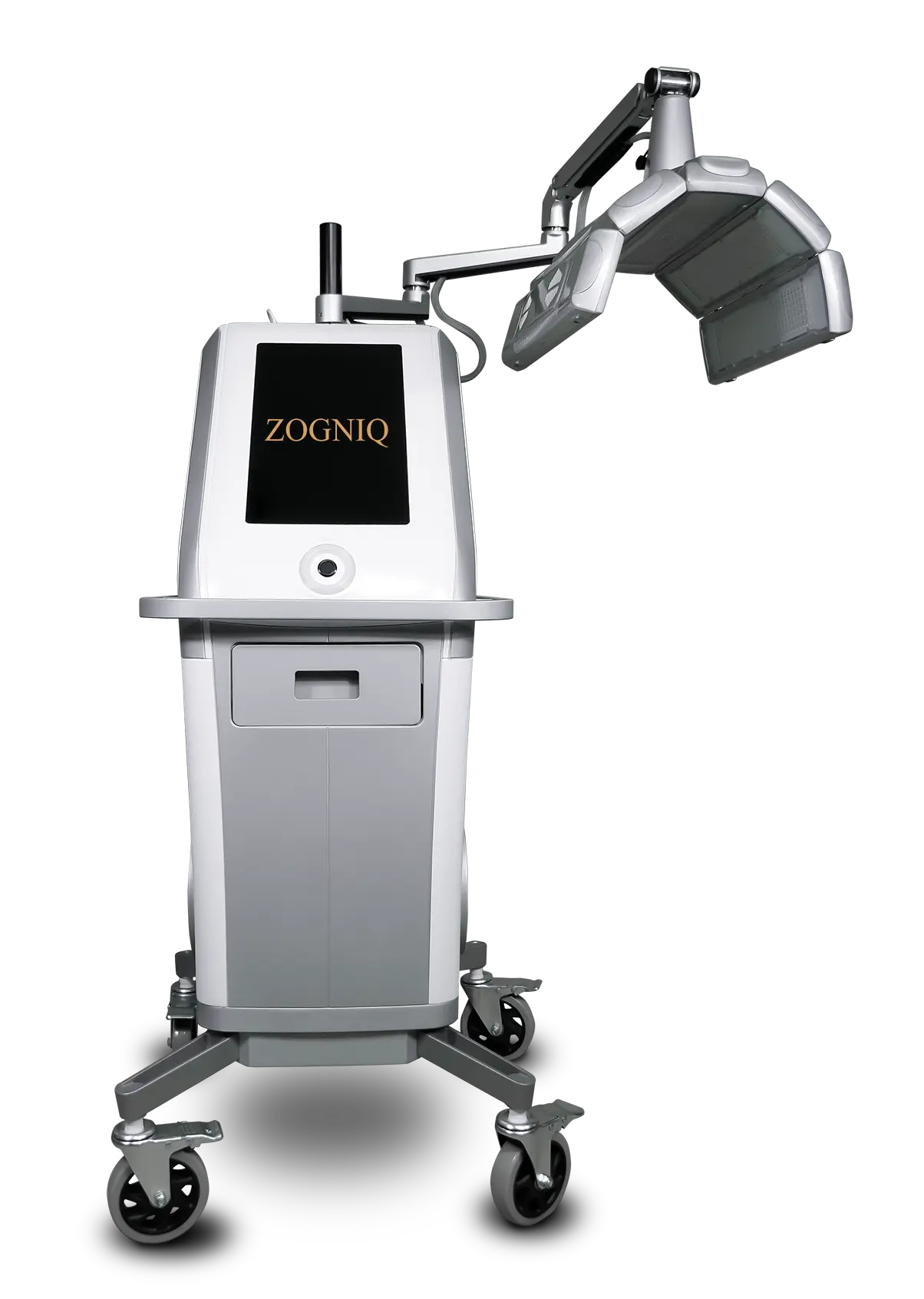
ZogniQ ZPL polarized light platform

Cash-pay

The practice sets what the service is worth, instead of building the model around a payer fee schedule.

Delegable

Sessions fit a staff-driven workflow once the team is trained, so the service doesn’t consume doctor chair time.

Repeatable

Documented dosimetry per wavelength, time-of-flight positioning and guided workflow standardize the session — the difference between a service line and a habit.

Visible to the patient

Integrated 8K pre- and post-session imaging gives you something concrete to review together, rather than relying only on how the patient says they feel.

No per-session consumable

Once the platform is in the practice, the economics aren’t built around buying another disposable for every session.

Differentiating

It’s a service the practice down the street almost certainly doesn’t offer — and one patients can actually see and describe to someone else.

Why this made #1

A good diagnostic device helps you find disease. A well-reimbursed procedure helps you capture more value from care you already provide. A patient-paid service can create an entirely new category inside the practice — one where you set the price, you control the schedule, and no one else decides what it’s worth. That’s why it takes the top spot.

Run the ZPL Numbers With Jim → See the practice economics → ZogniQ ZPL product page →

Regulatory note. ZogniQ ZPL is offered within a general-wellness framework. It is not FDA-cleared or FDA-approved to diagnose or treat dry-eye disease, meibomian gland dysfunction, or any other medical condition. Carolina Optics is a ZogniQ dealer.

#2OCT Angiography

OCTA changed the ROI equation on an OCT purchase

OCT Angiography finally has its own Category I CPT code. 92137 took effect January 1, 2025, and unlike the old approach of reporting OCTA under 92134, CMS actually accounted for the angiography work when it valued the code. That changes the arithmetic on replacing an OCT.

2026 National Medicare Allowed Amount
92134 · Standard retinal OCT~$32.73
92137 · Retina imaging including OCT-A~$59.79
≈ 83% higher when OCTA is the appropriate test

National unadjusted averages, before geographic adjustment. Published figures vary slightly by source; your locality will differ.

This is not additive reimbursement. 92137 cannot be reported with 92133 or 92134 at the same encounter — it is the correct code instead of 92134 when angiography is performed and medically necessary. It is unilateral or bilateral, so it’s reported once regardless of one eye or two. It needs a documented physician order, a documented indication, and a signed interpretation and report. Capturing OCTA on every patient because the device can, then billing 92137, is a well-known audit trigger — screening is not covered even if pathology turns up.

I’d rather you hear that caveat from me than from a payer. The honest version of this opportunity is narrower than the headline number, and still worth having: for the patients where angiography genuinely changes what you see, the code now recognizes the work.

Jim’s OCT pick

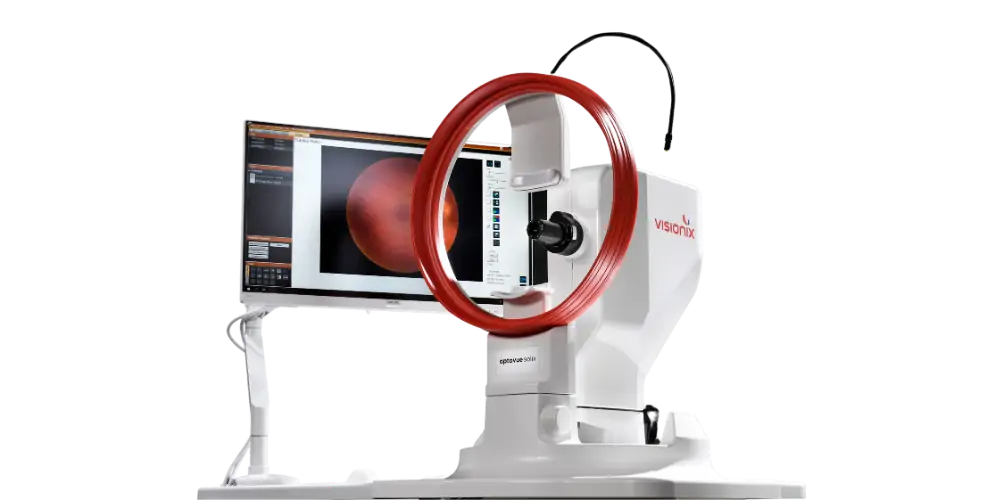
Optovue Solix by Visionix

“If I were buying one premium OCT to cover as much of the practice as possible, the Solix would be my first look.”

— Jim Schwartz, Carolina Optics

The reason isn’t that OCTA reimburses better. It’s that OCTA isn’t an isolated feature on this platform — the same capital purchase reaches retina, glaucoma, anterior segment and wellness screening. That makes the return story much broader than a single CPT code, and it’s a harder box to outgrow in three years.

  • 120,000 A-scans/second, 5 µm axial resolution
  • FDA-cleared AngioVue OCTA with vessel-density metrics, no dye
  • FullRange posterior to 16 × 6.25 mm and anterior to 18 × 6.25 mm
  • OCT-A scan sizes 3×3 through 12×12 mm
  • iWellness screening scan and integrated fundus imaging
  • DualTrac motion correction and AI-assisted layer segmentation
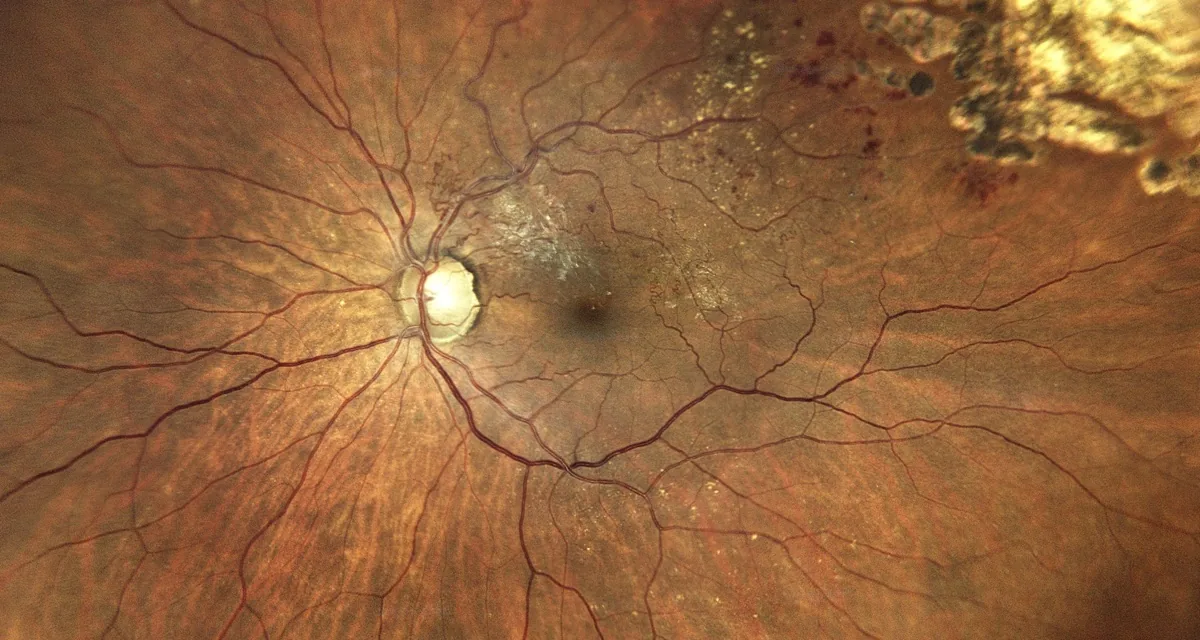
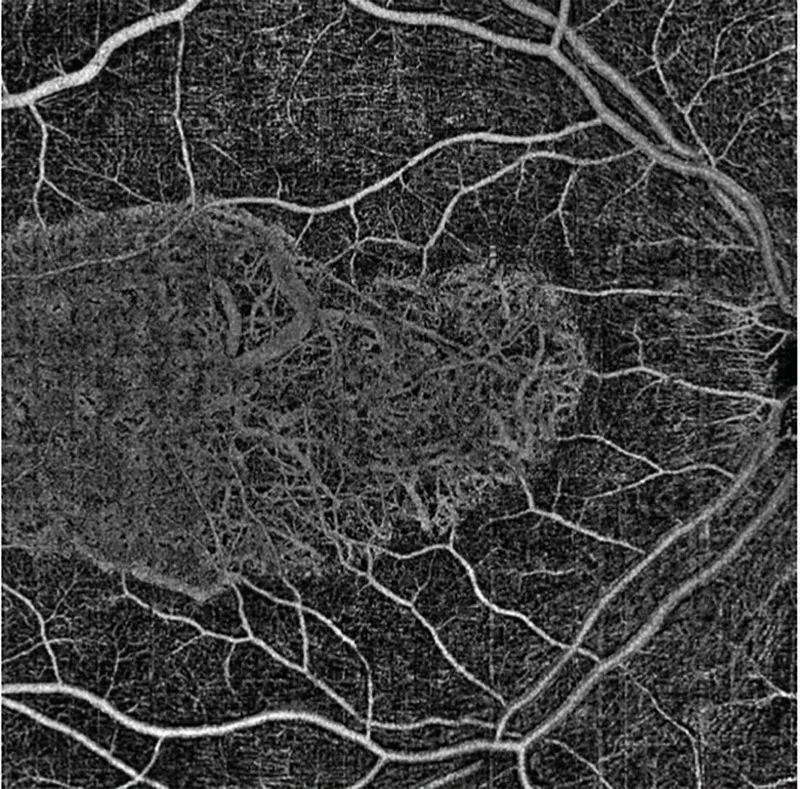
AngioVue OCT Angiography of the superficial retina, 9 x 9 mm scan captured on the Optovue Solix

AngioVue OCTA, superficial retina, 9×9 mm. Clinical image courtesy of Visionix.

See the Solix With Jim → Full Solix product page → Solix vs Maestro vs Cirrus →
#3Amniotic membrane, in the office

You may already have the patients

A lot of doctors still file amniotic membrane under “something a corneal surgeon does.” For sutureless in-office placement, that isn’t where this lives. If you manage ocular-surface disease, the first question probably isn’t whether you want to build a new specialty — it’s how many appropriate patients you’re already referring out or managing without this option.

Persistent epithelial defect

Where it has failed conservative therapy.

Recurrent erosion / EBMD

After conservative care has been tried and documented.

Neurotrophic keratitis

A recognized indication in most payer policies.

Corneal ulcer

Selected cases, plus other significant epithelial compromise.

Case selection is the whole game here. This is not a routine dry-eye add-on, and generic dry-eye syndrome as the primary diagnosis is generally not covered on its own. Coverage depends on documented medical necessity, payer policy, and failure of conservative therapy where the policy requires it.

The part most people miss

The reimbursement only exists in the exam chair

CPT 65778 is sutureless placement of amniotic membrane on the ocular surface. Here is the same procedure, same code, in two different places of service under the 2026 fee schedule.

In your office
$1,275
Non-facility national average
38.18 RVUs
vs
In a facility
$35.74
Facility national average
1.07 RVUs

Same procedure. The office payment is roughly 36× the facility payment, because in the office setting the practice expense — including the membrane itself — is built into the allowance. Send the case to a surgical suite and that value goes with it.

Read this number honestly. It is an allowed amount, not profit and not a payment guarantee — the membrane cost comes out of it. 65778 carries a 0-day global period, and under minor-procedure rules a same-day office visit is generally not separately billable, because the payment already accounts for it. Medicare includes the membrane supply in 65778 and 65779, so V2790 is not billed separately with those codes. Amounts are national averages before geographic adjustment.

SurSight by Surgenex
Storage & handling
Storage
Room temperature
Thaw time
None
Form
Dehydrated, terminally sterilized
Ophthalmic sizes
5 mm – 15 mm
Regulatory
Section 361 HCT/P

No freezer. No cold chain. No dedicated storage space.

Jim’s pick

SurSight by Surgenex

The code is procedure-based, not brand-based — so the real question isn’t which membrane bills better, it’s which one makes adoption easy enough that you actually use it on the appropriate patient in front of you. SurSight is the one I like on workflow.

  • Room-temperature storage. No freezer, no cold chain, no dedicated space.
  • No thawing. Dehydrated, terminally sterilized, ready when the patient presents.
  • Bi-directional application. Either side can face the ocular surface — no orientation guesswork.
  • Ophthalmic sizing. Multiple sizes from 5 mm to 15 mm diameter.
  • Section 361 HCT/P, single layer of amnion, intended for homologous use.
Ask Jim About SurSight → Full reimbursement walkthrough → SurSight product page →
Honorable Mention

Make advanced screening part of pretest

This one didn’t make the top three, but it’s the most common thing I see working right now. A growing number of practices build advanced retinal or OCT screening into the pretest workflow and offer it as a transparent self-pay wellness service where coverage doesn’t apply. The standard protocol is to image everyone unless the patient declines — which is what gets capture rates high — with the fee disclosed up front.

Published industry billing guidance puts typical fees for non-covered wellness retinal imaging at roughly $39 to $65, depending on the market and on whether OCT screening is bundled in.

Three things worth getting right before you start. There is no CPT code for healthy-eye wellness screening — that’s precisely why it’s a patient-pay service. Screening is non-covered regardless of what you find: if pathology turns up on a screening image, that image still isn’t billable, and the patient returns for medically necessary testing that’s ordered and documented. And because screening is statutorily excluded, an ABN isn’t required — but you do want the patient’s acceptance of financial responsibility in writing beforehand, and the image and your interpretation in the chart either way.

The practices that do well with this aren’t just charging for another picture. They make the test fast enough to live in pretest, and they give the patient something the doctor can actually walk them through. Three ways I’d build it, in the order I’d look at them:

iCare EIDON Ultra-Widefield retinal imaging system
Jim’s first pick

iCare EIDON AF / UWF

  • 120° TrueColor confocal single capture
  • Automated mosaic up to 200° — about a minute per eye
  • Autofluorescence and infrared
  • Non-mydriatic from a 2.5 mm pupil
  • Auto-align, auto-focus, auto-capture

Fully automated capture is what makes it survive a busy pretest — a trained tech runs it, not the doctor.

Optovue Solix FullRange OCT by Visionix
OCT-first approach

Solix iWellness

  • Quick OCT screening scan of retina and optic nerve
  • Feeds naturally into full OCT and OCTA when indicated
  • Same platform covers the diagnostic side
  • Integrated fundus imaging

The argument for this one is consolidation: the screening service and your OCTA capability live on a single capital purchase.

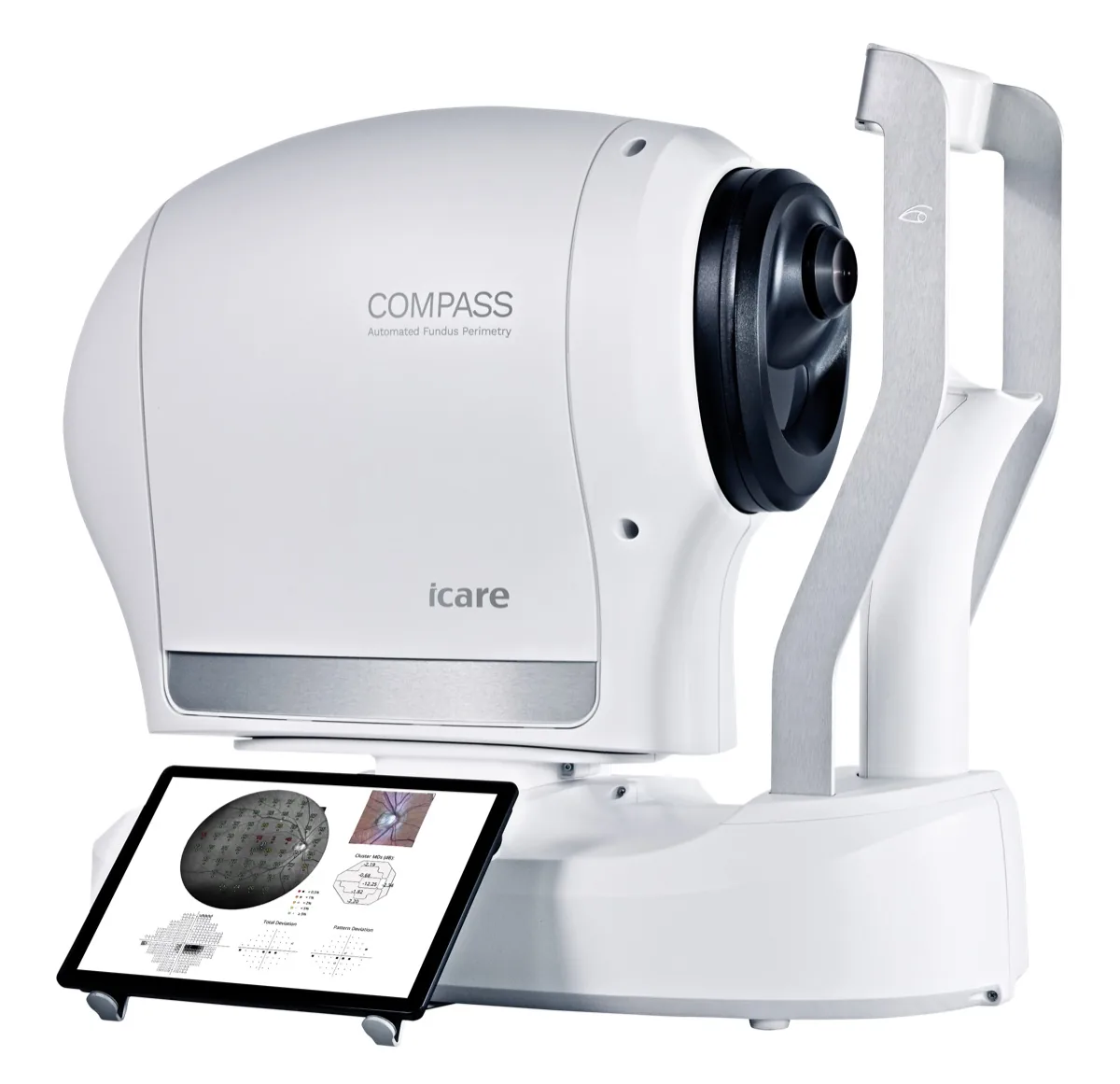
iCare COMPASS fundus automated perimeter
Field + image in one test

iCare COMPASS

  • Quick SupraThreshold screening field — about a minute per eye
  • TrueColor confocal retinal image from the same test
  • 100° SmartMosaic view of the retina
  • Active 25 Hz retinal tracking
  • Non-mydriatic, no trial lenses

The one that gives you two screening deliverables from a single short test — function and structure together.

Build My Screening Workflow → Compare imaging platforms →
The Actual Point of This Page

Which one actually makes sense for your practice?

You almost certainly don’t need all four. That’s the point — I didn’t want this to end as another product catalog.

Tell me what kind of practice you have, what you’re already running, and where you’re trying to grow. I’ll tell you which one I’d investigate first. And if I don’t think any of them fit your office, I’ll tell you that too.

Or call Jim directly at (919) 523-2590. No obligation, no pressure.

Sources & Verification

Where every number on this page comes from

This page quotes specific dollar figures, RVUs and CPT rules. You should be able to check all of them without taking my word for it — and you should check them, because payer policy changes and I am the person selling the equipment.

Reimbursement & coding — amniotic membrane (65778)

$1,275 non-facility / $35.74 facility. CY2026 Medicare Physician Fee Schedule national payment amounts for CPT 65778, calculated as total RVUs × the CY2026 conversion factor of $33.4009 — 38.18 total non-facility RVUs and 1.07 total facility RVUs. Verify in the CMS Physician Fee Schedule Look-Up Tool or the PFS Relative Value Files. These are national unadjusted allowed amounts before geographic adjustment, not profit and not a payment guarantee.

0-day global period. Per the global surgery indicator for 65778 in the PFS relative value files. Under minor-procedure rules a same-day office visit is generally not separately billable.

V2790 is not separately billable with 65778 or 65779. Medicare includes the membrane supply in the practice expense for these codes.

65780 is facility-only. It carries no non-facility RVU, which is why this page points to 65778 for a procedure performed in your own office. The code follows the procedure actually performed — it is not a property of any brand of membrane.

Reimbursement & coding — OCT Angiography (92137)

92137 is a Category I CPT code effective January 1, 2025 — per the AMA CPT 2025 code set. It is not a 2026 code; what makes it a 2026 conversation is that practices are now making OCT purchase decisions with it in place.

~$59.79 vs ~$32.73. CY2026 national unadjusted Medicare allowed amounts for 92137 and 92134 respectively, from the same CMS sources listed above.

Not billable with 92133 or 92134 at the same encounter. 92137 is reported instead of 92134 when angiography is performed and medically necessary — it does not stack. It is a unilateral-or-bilateral code, reported once whether one eye or both are imaged, and requires a documented order, a documented indication, and a signed interpretation and report.

Patient-pay wellness screening

There is no CPT code for wellness screening of a healthy eye. That is precisely why it is a patient-pay service rather than a billable one.

Screening is non-covered regardless of findings. Because it is statutorily excluded from the Medicare benefit, an ABN is not required — but written acknowledgment of financial responsibility before the test is the right practice, and the image and your interpretation belong in the chart either way. If a claim is demanded, the GY modifier reports a statutorily excluded service.

The $39–$65 range is drawn from published industry billing guidance on non-covered retinal wellness imaging. It describes what practices commonly charge — it is not a recommended fee, and pricing is a decision for your practice and your market. Ask me and I will send you the source.

Regulatory positioning

ZogniQ ZPL is offered within a general wellness framework. It is not FDA-cleared or FDA-approved to diagnose or treat dry eye, meibomian gland dysfunction, blepharitis or any other disease, and nothing on this page should be read as a treatment claim. It is presented here as a patient-pay service model, which is the entire reason it ranks #1 on a practice-building list rather than a clinical one.

SurSight is a Section 361 HCT/P — a human cell and tissue product regulated under 21 CFR Part 1271, intended for homologous use as a protective covering. Products in this category do not carry drug or device claims, which is why this page describes handling, sizing and workflow rather than biologic performance.

Device specifications

iCare EIDON AF/UWF — 120° single capture, automated mosaic up to 200°, approximately one minute per eye, non-mydriatic from a 2.5 mm pupil. Per iCare’s current published specifications.

iCare COMPASS — 100° SmartMosaic retinal view, Quick SupraThreshold screening field of roughly 30–90 seconds per eye (published mean 71 ± 41 s), 25 Hz active retinal tracking. Per iCare’s current published specifications.

Optovue Solix by Visionix — per Visionix’s current published specifications.

Specifications are drawn from manufacturer documentation current as of the review date below and can change without notice. If a specification is load-bearing for your purchase decision, ask me to confirm it against the manufacturer’s current documentation in writing before you buy.

Last reviewed: September 1, 2026. Payer rules, fee schedules and product specifications change. Confirm current information before making a purchasing or billing decision.

Reimbursement note. Coding and payment information on this page is provided for general educational purposes and is not a guarantee of coverage or payment. Coverage, medical necessity, documentation requirements, frequency limits and payment amounts vary by payer, patient, diagnosis, place of service, locality and date of service. Medicare figures shown are national unadjusted averages before geographic adjustment, and are allowed amounts rather than practice profit. Practices are responsible for verifying current coding and payer policy before billing. Carolina Optics does not provide billing, coding, or legal advice.

Carolina Optics is an independent distributor and an authorized dealer for the products described on this page, and is compensated on sales. Product specifications are drawn from current manufacturer documentation and may change. Clinical images are manufacturer marketing images that illustrate the platform rather than any individual unit or patient outcome. This page reflects Jim Schwartz’s opinion about practice-building opportunities and is not clinical, billing, or investment advice.